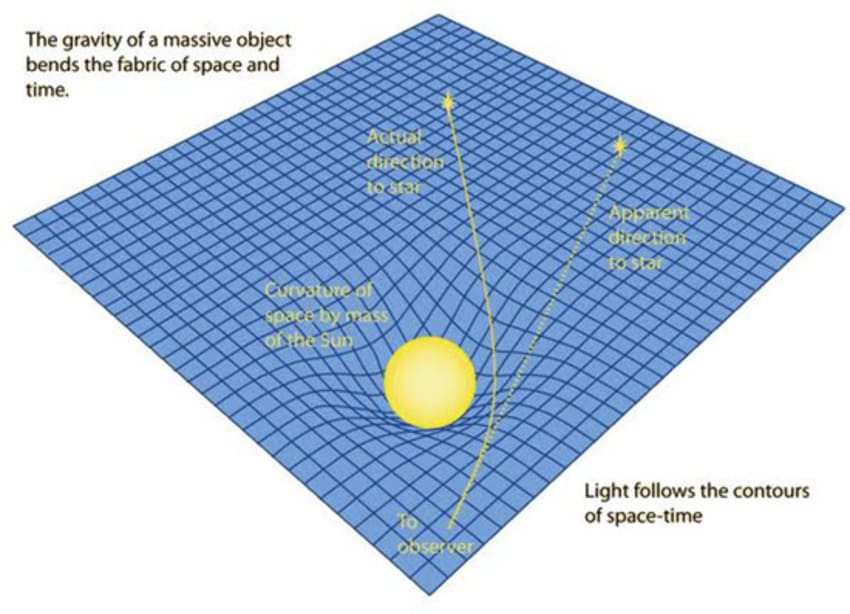
Toward a Unified Gauge–Geometric Paradigm: Contemporary Advances in Merging Gravity with the Standard Model
Title
Toward a Unified Gauge–Geometric Paradigm: Contemporary Advances in Merging Gravity with the Standard Model
Author
1. Joseph Omekagu, Student, Federal University of Technology, Nigeria
Abstract
Contemporary theoretical physics faces its most persistent challenge: constructing a coherent, predictive, and mathematically sound unification framework that merges quantum field theory with the geometric foundations of general relativity. Recent developments across gauge-theoretical, geometric, and scalar-discrete approaches have produced innovative directions aiming to bridge this foundational gap. This review synthesizes insights from modern gauge-gravity unification theories, including gauge-induced gravity, nonlinear geometric frameworks, holomorphic unification, consistent gauge actions, and quantum-field-theoretic treatments of gravity. Additionally, discrete scalar frameworks highlight alternative pathways beyond continuum geometry. By integrating these diverse viewpoints, the review identifies conceptual convergence points, assesses theoretical consistency, outlines mathematical innovations, and maps out open questions in the pursuit of a unified physical law. The objective is to present a clear, critical synthesis of current research trajectories and to highlight how modern gauge structures and geometric reformulations may ultimately lead to a full quantum theory of gravity compatible with the Standard Model.
Keywords
Conclusion
The pursuit of a unified theory that reconciles gravity with the Standard Model continues to drive some of the most profound theoretical developments in modern physics. The frameworks reviewed in this study demonstrate that significant conceptual convergence is emerging across diverse approaches, each reshaping the foundations of how gravity is understood. Unitary gauge-symmetry models suggest that gravity may originate from internal algebraic structures rather than purely from spacetime geometry. Nonlinear geometric formulations such as the Weyl–Dirac–Born–Infeld action reveal that stability, mass generation, and high-energy behavior can be unified under extended geometric and gauge principles. Holomorphic field theories expand the mathematical landscape by embedding gravity and particle physics within complex analytic structures, offering new routes to quantization and symmetry unification.
Quantum-field-theoretic approaches, particularly those grounded in renormalization group methods, show that gravity may be quantizable without abandoning its deep geometric roots. Pure-connection formulations and first-order gauge-theoretic actions demonstrate that geometry itself may emerge from more fundamental gauge variables, bringing gravity structurally closer to the Standard Model. Even discrete-scalar theories such as Pole Theory highlight that unification may not depend on continuous fields at all, but on deeper algebraic dynamics underlying quantum and geometric behavior.
Together, these approaches indicate that unification may arise from symmetry, algebra, or discrete structure rather than from traditional curvature-based concepts. They collectively suggest that gravity is not an outlier among fundamental interactions but a natural extension of the symmetry principles governing particle physics. Future research will need to clarify which mathematical framework best captures the true structure of the universe, how these theories connect with observable phenomena, and what predictions may distinguish one unified model from another. As theoretical tools advance and experimental sensitivity increases, the vision of a single, coherent framework encompassing all fundamental forces appears increasingly within reach.
Author Contrubution
The author confirms sole responsibility for the following: study conception and design, data collection, analysis and interpretation of results, and manuscript preparation.
Funding
The authors did not receive any specific grants from funding agencies in the public, commercial, or non-profit sectors for the research, authorship, and/or publication of this article.
Conflict of Interest
All authors declare that they have no conflicts of interest.
Data Sharing Statement
Not applicable.
Software And Tools Use
Not applicable.
Acknowledgements
I thank the following individuals for their expertise and assistance in all aspects of our study and for their help in writing the manuscript. I am also grateful for the insightful comments given by anonymous peer reviewers. Everyone's generosity and expertise have improved this study in myriad ways and saved me from many errors.
Corresponding Author
Joseph Omekagu
Federal University of Technology, Student, Nigeria
Copyright
Copyright: ©2026 Corresponding Author. This is an open access article distributed under the terms of the Creative Commons Attribution License , which permits unrestricted use, distribution, and reproduction in any medium, provided the original author and source are credited.
Omekagu, Joseph. “Toward a Unified Gauge–Geometric Paradigm: Contemporary Advances in Merging Gravity with the Standard Model.” Scientific Research Journal of Environment, Earth and Physical Science, vol. 3, no. 2, 2026, pp. 32-37, https://isrdo.org/journal/SRJEEP/currentissue/toward-a-unified-gaugegeometric-paradigm-contemporary-advances-in-merging-gravity-with-the-standard-model
Omekagu, J. (2026). Toward a Unified Gauge–Geometric Paradigm: Contemporary Advances in Merging Gravity with the Standard Model. Scientific Research Journal of Environment, Earth and Physical Science, 3(2), 32-37. https://isrdo.org/journal/SRJEEP/currentissue/toward-a-unified-gaugegeometric-paradigm-contemporary-advances-in-merging-gravity-with-the-standard-model
Omekagu Joseph, Toward a Unified Gauge–Geometric Paradigm: Contemporary Advances in Merging Gravity with the Standard Model, Scientific Research Journal of Environment, Earth and Physical Science 3, no. 2(2026): 32-37, https://isrdo.org/journal/SRJEEP/currentissue/toward-a-unified-gaugegeometric-paradigm-contemporary-advances-in-merging-gravity-with-the-standard-model
2166
Total words808
Unique Words104
Sentence20.182692307692
Avg Sentence Length0.26130507224257
Subjectivity0.06241542022792
PolarityText Statistics
Viewed / Downloads
Total article views: 187 (including HTML, PDF, and XML)| HTML | XML | Total | |
|---|---|---|---|
| 120 | 39 | 28 | 187 |
Viewed (geographical distribution)
Thereof 187 with geography defined and 0 with unknown origin.