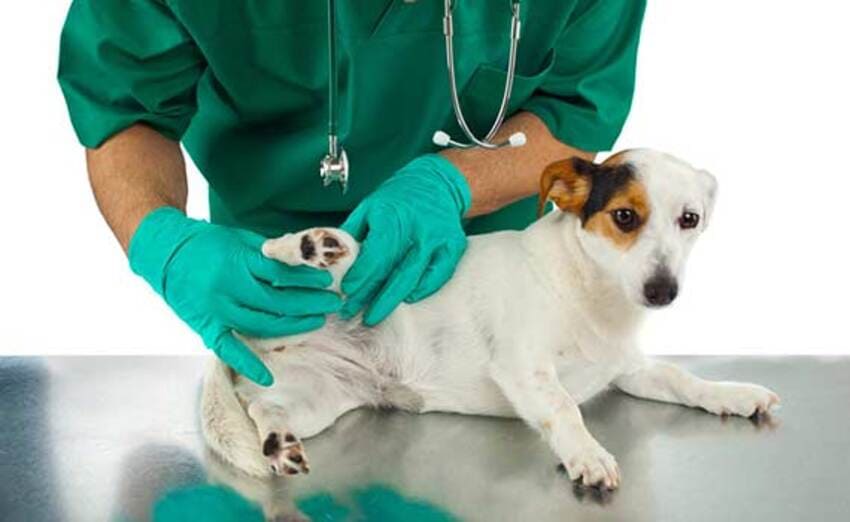
Advances and Emerging Perspectives in Veterinary Stem Cell Therapy: Current Progress, Biological Challenges, and Future Clinical Directions
Title
Advances and Emerging Perspectives in Veterinary Stem Cell Therapy: Current Progress, Biological Challenges, and Future Clinical Directions
Author
1. Da Lin,
Postdoctoral Researcher, Royal University of Agriculture, Phnom Penh, Cambodia
2. Sonavin Rem,
Lecturer, Royal University of Agriculture, Phnom Penh, Cambodia
Abstract
Stem-cell–based therapies have become one of the most rapidly advancing areas in veterinary regenerative medicine, offering promising alternatives for managing musculoskeletal injuries, neurological disorders, immune-mediated diseases, and various forms of tissue degeneration in both companion and farm animals. In recent years, notable progress has been made in the isolation, characterization, and therapeutic use of mesenchymal stromal/stem cells (MSCs), supported by improvements in cell culture methods, expanding clinical evidence, deeper molecular understanding, and growing awareness among veterinary practitioners.
Early work established the clinical potential of MSCs for treating orthopedic and inflammatory conditions in animals, laying the foundation for today’s applications. More recent investigations have expanded this knowledge by examining cell morphology, proliferative capacity, cytogenetic stability, and overall safety during in vitro expansion, while also exploring new therapeutic possibilities across multiple animal species. Surveys of practicing veterinarians indicate increasing acceptance of stem-cell–based treatments, alongside clear gaps in knowledge, regulation, and clinical standardization. Additionally, insights from human medical research have enriched current understanding of immune modulation, tissue engineering, and translational challenges relevant to veterinary practice.
This comprehensive review brings together progress across scientific, clinical, ethical, and practical dimensions of veterinary stem cell therapy. It identifies persistent limitations in standardization, long-term safety assessments, regulatory clarity, and practitioner training. It also highlights future directions that may shape the next era of veterinary regenerative medicine, including the integration of genomic editing, advanced biomaterials, data-driven treatment planning, and broader, well-designed clinical trials.
Keywords
Conclusion
Stem cell therapy has rapidly evolved into one of the most promising therapeutic approaches in veterinary medicine, offering significant benefits for treating musculoskeletal injuries, immune-mediated disorders, neurological conditions, reproductive dysfunctions, and a wide range of tissue regeneration challenges. Foundational research established the scientific credibility of mesenchymal stromal/stem cells (MSCs), while recent work has provided deeper insights into their biological characteristics, cytogenetic stability, and clinical applications across multiple species. Despite these advances, substantial challenges remain in achieving standardized protocols, regulatory oversight, and consistent practitioner understanding.
For stem-cell therapies to reach their full potential in veterinary practice, future efforts must prioritize the development of international guidelines, improvement of practitioner training, and investment in long-term clinical trials. Emerging innovations such as gene editing, biomaterial-assisted regeneration, exosome-based therapies, and data-driven treatment planning hold considerable promise for enhancing therapeutic precision, safety, and overall clinical outcomes.
By synthesizing past achievements, current limitations, and forward-looking opportunities, this review underscores the dynamic trajectory of veterinary regenerative medicine. As scientific knowledge expands and enabling technologies mature, stem cell therapy is poised to become an essential component of evidence-based veterinary practice worldwide.
Author Contrubution
The author handled all aspects of the study, including its design, data collection, analysis, and manuscript preparation.
Funding
This research, including authorship and publication, did not receive any specific grant from funding agencies in the public, commercial, or non-profit sectors.
Conflict of Interest
No conflicts of interest are reported by the authors.
Data Sharing Statement
Not applicable
Software And Tools Use
Not applicable
Acknowledgements
I am grateful for the expertise and help provided by all who contributed to this study and manuscript, and for the comments from anonymous reviewers.
Corresponding Author
Da Lin
Royal University of Agriculture, Phnom Penh, Postdoctoral Researcher, Cambodia
Sonavin Rem
Royal University of Agriculture, Phnom Penh, Lecturer, Cambodia
Copyright
Copyright: ©2026 Corresponding Author. This is an open access article distributed under the terms of the Creative Commons Attribution License , which permits unrestricted use, distribution, and reproduction in any medium, provided the original author and source are credited.
Lin, Da, and Rem, Sonavin. “Advances and Emerging Perspectives in Veterinary Stem Cell Therapy: Current Progress, Biological Challenges, and Future Clinical Directions.” Scientific Research Journal of Agriculture and Veterinary Science, vol. 3, no. 2, 2026, pp. 9-15, https://isrdo.org/journal/SRJAV/currentissue/advances-and-emerging-perspectives-in-veterinary-stem-cell-therapy-current-progress-biological-challenges-and-future-clinical-directions
Lin, D., & Rem, S. (2026). Advances and Emerging Perspectives in Veterinary Stem Cell Therapy: Current Progress, Biological Challenges, and Future Clinical Directions. Scientific Research Journal of Agriculture and Veterinary Science, 3(2), 9-15. https://isrdo.org/journal/SRJAV/currentissue/advances-and-emerging-perspectives-in-veterinary-stem-cell-therapy-current-progress-biological-challenges-and-future-clinical-directions
Lin Da and Rem Sonavin, Advances and Emerging Perspectives in Veterinary Stem Cell Therapy: Current Progress, Biological Challenges, and Future Clinical Directions, Scientific Research Journal of Agriculture and Veterinary Science 3, no. 2(2026): 9-15, https://isrdo.org/journal/SRJAV/currentissue/advances-and-emerging-perspectives-in-veterinary-stem-cell-therapy-current-progress-biological-challenges-and-future-clinical-directions
2710
Total words1151
Unique Words116
Sentence22.887931034483
Avg Sentence Length0.26977712780515
Subjectivity0.057404338956063
PolarityText Statistics
Viewed / Downloads
Total article views: 182 (including HTML, PDF, and XML)| HTML | XML | Total | |
|---|---|---|---|
| 108 | 51 | 23 | 182 |
Viewed (geographical distribution)
Thereof 182 with geography defined and 0 with unknown origin.