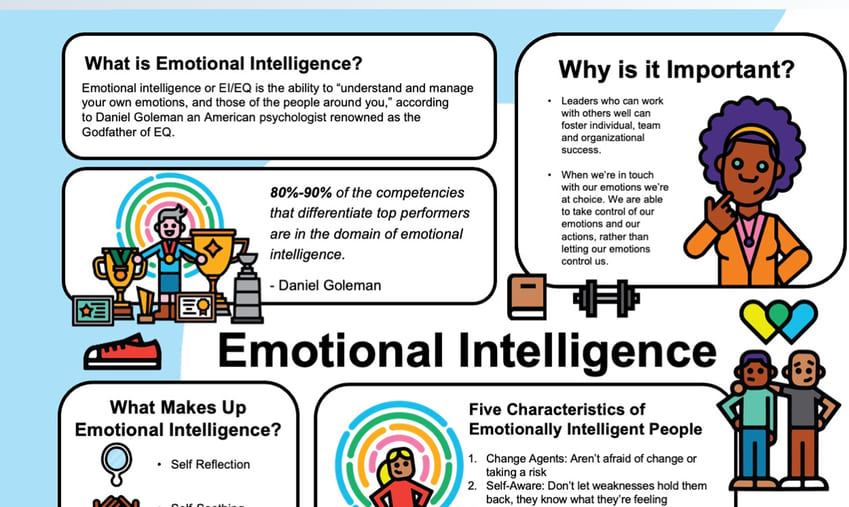
EMOTIONAL INTELLIGENCE AND ITS IMPACT ON TEACHING PERFORMANCE: A STUDY AMONG COLLEGE TEACHERS IN MUMBAI
Title
EMOTIONAL INTELLIGENCE AND ITS IMPACT ON TEACHING PERFORMANCE: A STUDY AMONG COLLEGE TEACHERS IN MUMBAI
Author
1. Dr. Jay Mamtora, Professor, The Byramjee Jeejeebhoy College of Commerce, India
Abstract
Emotional Intelligence (EI) has emerged as a critical determinant of professional effectiveness, particularly in education where interpersonal interactions, emotional regulation, and communication play a vital role. This study examines the impact of Emotional Intelligence on the teaching performance of college teachers in Mumbai. The research adopts a quantitative approach using a structured Likert-scale questionnaire administered to college faculty members across various institutions affiliated with the University of Mumbai. Emotional Intelligence is conceptualized through dimensions such as self-awareness, self-regulation, motivation, empathy, and social skills, while teaching performance is assessed through classroom management, student engagement, instructional effectiveness, and professional commitment.
The findings indicate a strong positive relationship between Emotional Intelligence and teaching performance. Teachers with higher EI demonstrate better classroom control, enhanced student engagement, and improved communication effectiveness. Prior studies have also established that emotional intelligence significantly influences teacher effectiveness, job satisfaction, and student learning outcomes . The study further reveals that emotionally intelligent teachers are more adaptable to stress and exhibit higher resilience, contributing to better academic outcomes.
The research highlights the need for integrating emotional intelligence training into faculty development programs. It concludes that EI is not merely a personality trait but a professional competency that significantly enhances teaching quality. The study provides practical recommendations for institutional policy and contributes to the growing body of literature linking emotional competencies with educational effectiveness.
Keywords
Conclusion
The present study on “Emotional Intelligence and Its Impact on Teaching Performance: A Study among College Teachers in Mumbai” highlights the growing importance of emotional competencies in the field of higher education. In an era where teaching extends beyond traditional knowledge delivery to include mentoring, emotional support, and holistic student development, Emotional Intelligence (EI) emerges as a critical determinant of teaching effectiveness.
The findings of the study clearly establish that college teachers in Mumbai exhibit a relatively high level of emotional intelligence, which significantly contributes to their teaching performance. Dimensions such as self-awareness, empathy, emotional regulation, and social skills play a crucial role in shaping classroom interactions and instructional outcomes. Teachers who are emotionally intelligent are better equipped to understand student needs, manage classroom dynamics, and foster a positive learning environment. This, in turn, enhances student engagement, participation, and overall academic performance.
The statistical analysis, particularly correlation and regression results, confirms a strong and positive relationship between Emotional Intelligence and Teaching Performance. The acceptance of the hypothesis further reinforces the argument that EI is not merely an inherent personality trait but a measurable and developable competency that directly influences professional effectiveness. Teachers with higher EI demonstrate better adaptability, resilience to stress, and improved communication skills, all of which are essential in managing the complexities of modern classrooms.
Furthermore, the study emphasizes that Emotional Intelligence contributes not only to individual teaching success but also to institutional effectiveness. Emotionally competent teachers are more likely to collaborate effectively with colleagues, maintain professional relationships, and contribute positively to the academic environment. This creates a ripple effect, leading to improved organizational culture and student satisfaction.
However, despite its significance, Emotional Intelligence remains an underexplored area in formal teacher training and evaluation systems. Most institutions continue to prioritize academic qualifications and pedagogical skills, often overlooking emotional competencies. This gap highlights the urgent need for integrating EI into faculty development programs, appraisal systems, and institutional policies.
In conclusion, the study underscores that Emotional Intelligence is a vital component of teaching excellence in higher education. For colleges in Mumbai and beyond, investing in the emotional development of teachers can lead to enhanced teaching quality, improved student outcomes, and overall institutional growth. Future research can further explore longitudinal impacts of EI training and its role in different educational contexts. The study thus contributes to both academic literature and practical policy-making by establishing EI as a cornerstone of effective teaching in the 21st century.
Author Contrubution
The author was solely responsible for the study's conception, data collection, analysis, interpretation, and manuscript preparation.
Funding
The authors did not receive financial support from any public, commercial, or non-profit funding agencies for this research.
Conflict of Interest
All authors state that there are no conflicts of interest.
Data Sharing Statement
Not applicable.
Software And Tools Use
Not applicable.
Acknowledgements
I am thankful for the help and expertise of all contributors to this study and manuscript, as well as the insightful feedback from anonymous reviewers.
Corresponding Author
Dr. Jay Mamtora
The Byramjee Jeejeebhoy College of Commerce, Professor, India
Copyright
Copyright: ©2026 Corresponding Author. This is an open access article distributed under the terms of the Creative Commons Attribution License , which permits unrestricted use, distribution, and reproduction in any medium, provided the original author and source are credited.
Mamtora, Dr. Jay. “EMOTIONAL INTELLIGENCE AND ITS IMPACT ON TEACHING PERFORMANCE: A STUDY AMONG COLLEGE TEACHERS IN MUMBAI.” Scientific Research Journal of Science, Engineering and Technology, vol. 4, no. 1, 2026, pp. 146-154, https://isrdo.org/journal/SRJSET/currentissue/emotional-intelligence-and-its-impact-on-teaching-performance-a-study-among-college-teachers-in-mumbai
Mamtora, D. (2026). EMOTIONAL INTELLIGENCE AND ITS IMPACT ON TEACHING PERFORMANCE: A STUDY AMONG COLLEGE TEACHERS IN MUMBAI. Scientific Research Journal of Science, Engineering and Technology, 4(1), 146-154. https://isrdo.org/journal/SRJSET/currentissue/emotional-intelligence-and-its-impact-on-teaching-performance-a-study-among-college-teachers-in-mumbai
Mamtora Dr. Jay, EMOTIONAL INTELLIGENCE AND ITS IMPACT ON TEACHING PERFORMANCE: A STUDY AMONG COLLEGE TEACHERS IN MUMBAI, Scientific Research Journal of Science, Engineering and Technology 4, no. 1(2026): 146-154, https://isrdo.org/journal/SRJSET/currentissue/emotional-intelligence-and-its-impact-on-teaching-performance-a-study-among-college-teachers-in-mumbai
3510
Total words1028
Unique Words168
Sentence20.410714285714
Avg Sentence Length0.4599190157836
Subjectivity0.12050400833734
PolarityText Statistics
Viewed / Downloads
Total article views: 180 (including HTML, PDF, and XML)| HTML | XML | Total | |
|---|---|---|---|
| 124 | 34 | 22 | 180 |
Viewed (geographical distribution)
Thereof 180 with geography defined and 0 with unknown origin.